Standing seam steel roofs
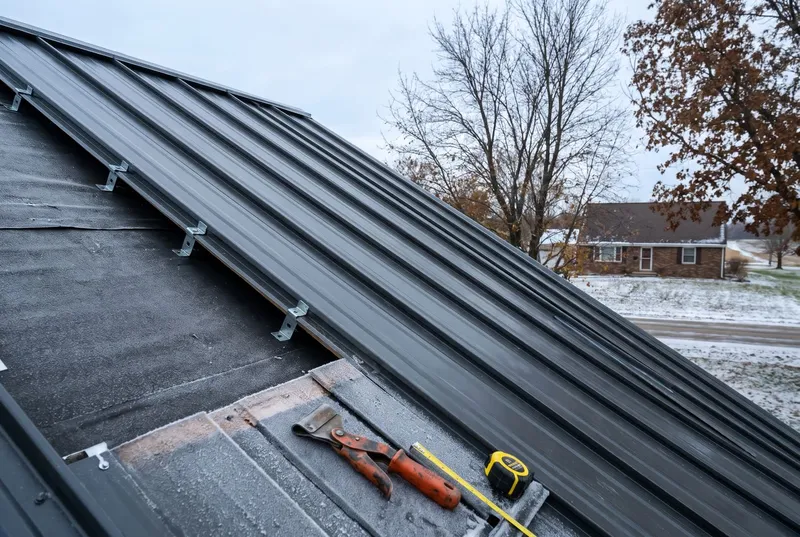
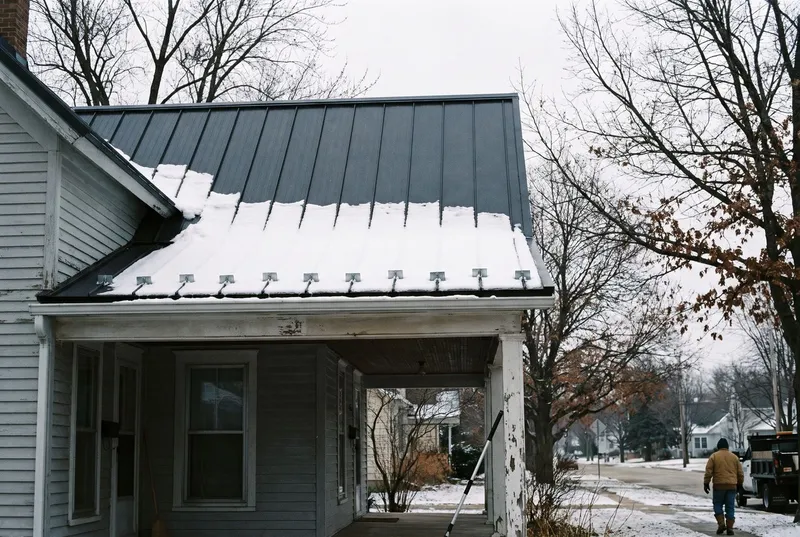
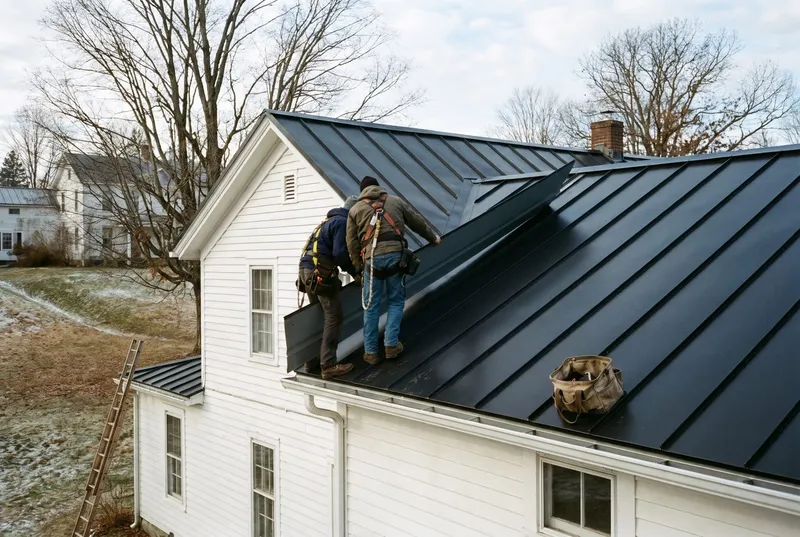
A 40-foot panel can grow almost half an inch between a minus-ten January night and a July afternoon in full sun. Concealed clips let it slide instead of tearing at screws, which is the whole reason standing seam outlives screw-down panels here. Seams run 1 to 1.5 inches tall. In our opinion 24 gauge is the right weight for a Madison house; 26 saves a little money and dents sooner under hail.
Steel shingle and shake profiles
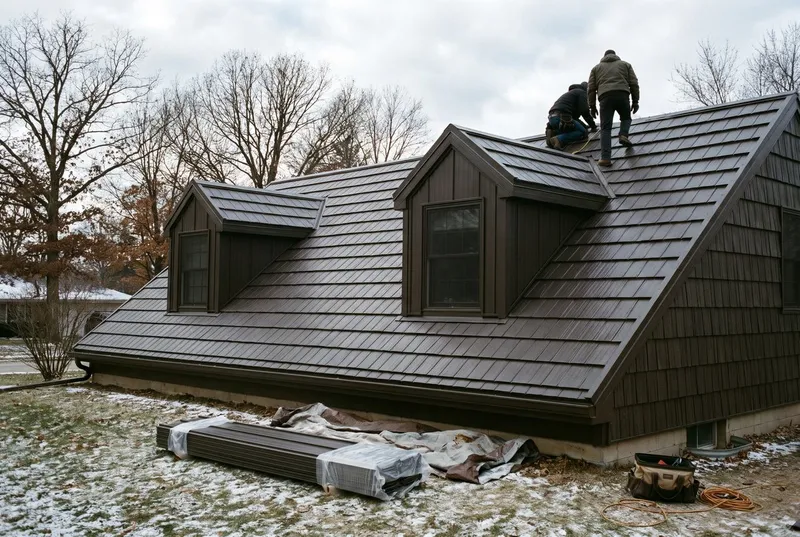
Some blocks near downtown would notice a ribbed roof on a 1920s house, and the neighbors would say so. Stamped steel shingles, slate and cedar-shake profiles fix that. They lock on all four sides, carry a Class A fire rating and weigh roughly a third of the asphalt they replace. Bring the profile samples up a ladder before you choose; the shadow lines read differently on an 8/12 pitch than on a 4/12.
Stone-coated steel roofing
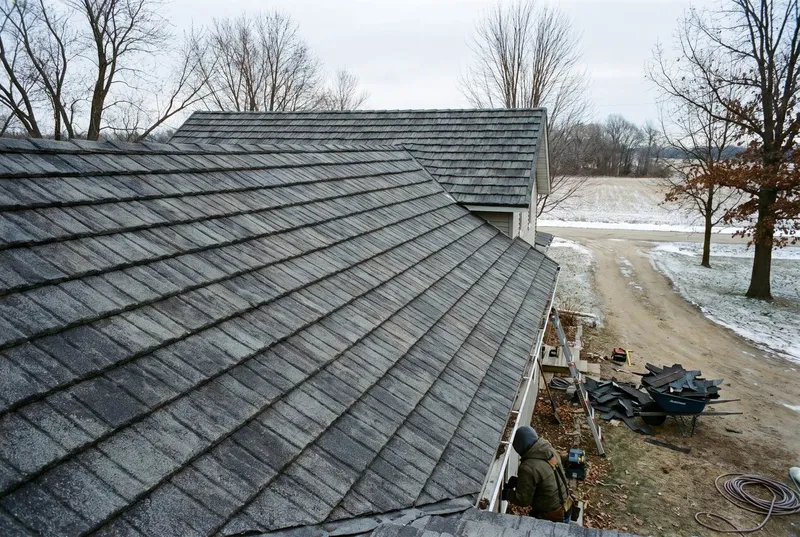
Stone granules fused to steel tiles do two things on the open ground east toward Sun Prairie: they quiet sleet, and they hide the small scuffs hail leaves. Most stone-coated systems test at UL 2218 Class 4. Pricier than plain steel shingles, and quieter than any other metal roof we put on.
Tear-off and full roof replacement with metal
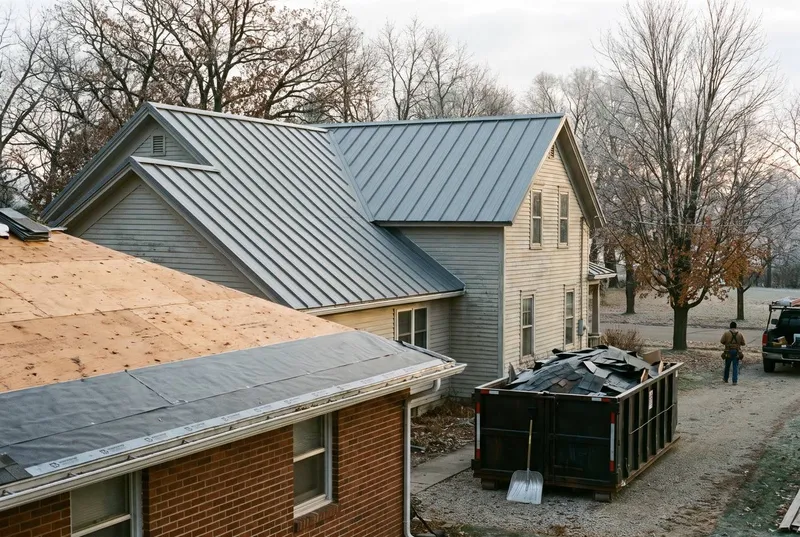
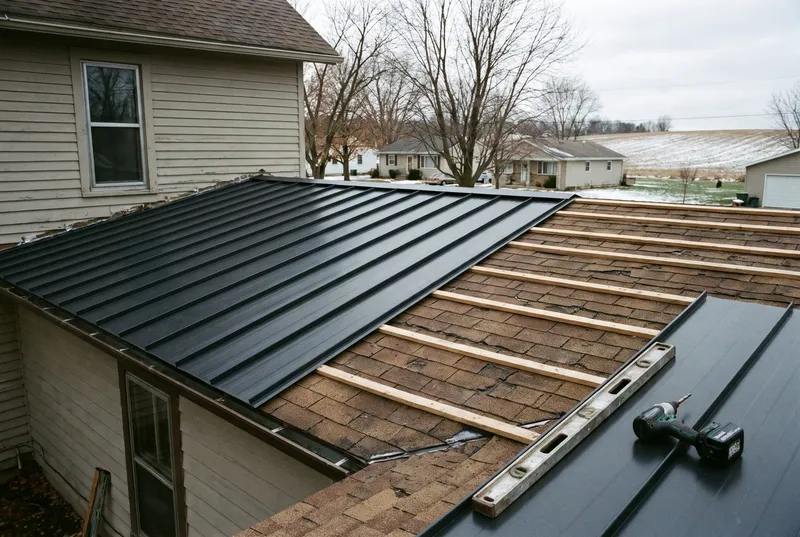
A tear-off here usually turns up one or two soft deck boards along the eaves, the spot where twenty winters of ice dams sat. We replace them, run ice and water barrier along every eave and valley, and only then start panels. The old shingles leave in a roll-off the same day. Where the town wants a permit for a reroof, it gets pulled before the dumpster arrives.
Installing metal over one layer of shingles
One layer of asphalt on a sound deck? Metal can go over it on 1x4 furring or a slip sheet, and you skip roughly a day of labor and the dumpster. Two layers, a spongy deck, or a leak you can already see from the attic, and the quote says tear-off. We would rather lose the job than bury a rotten deck under a 50-year roof.
Exposed-fastener and ag-panel roofs
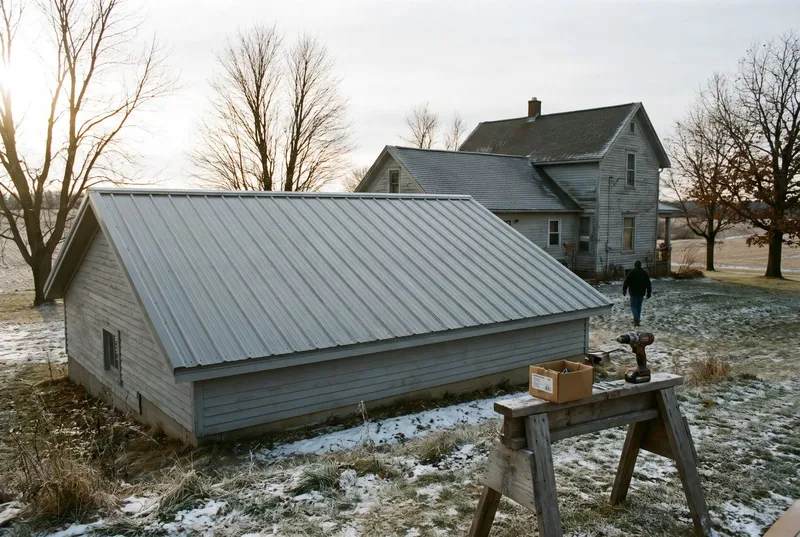
Screw-down ribbed steel, 26 or 29 gauge, is what most Dane County farm buildings wear, and plenty of people still call it a tin roof. It costs about half of standing seam. The catch is the rubber washer under each of a few thousand screws: after 15 to 20 summers they harden and some need replacing. Fine on a garage. We think twice before putting it on the house.
Metal roofs for older Madison houses
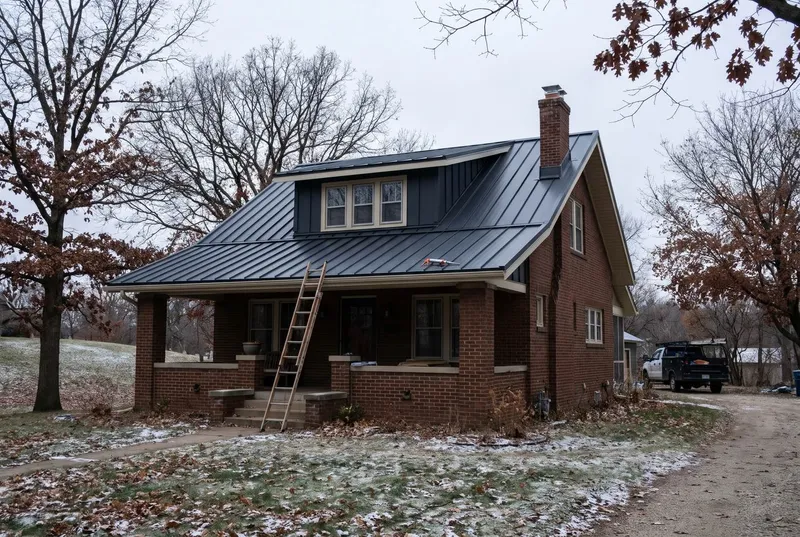
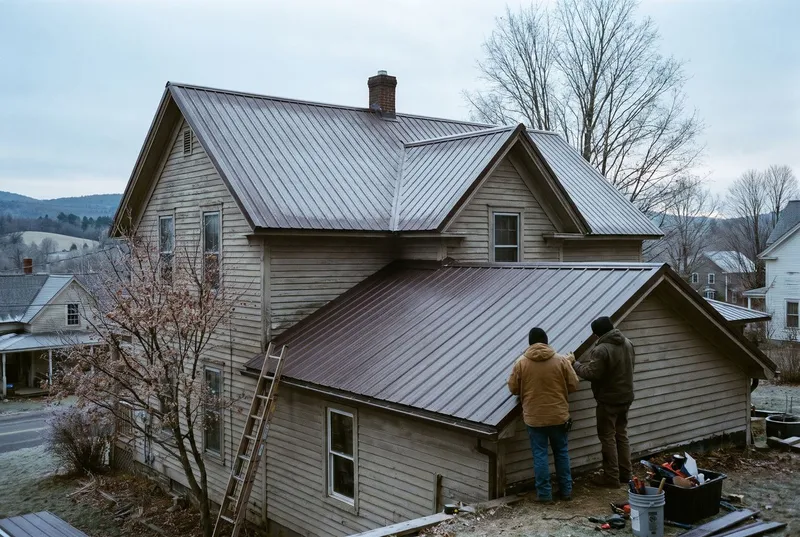
Bungalows, Foursquares and Cape Cods built before 1940 come with dormers, steep pitches, brick chimneys and porch roofs that meet the main roof at odd angles. Each of those joints gets trim bent on site for that spot. Done right, the roof still looks like it was meant for a hundred-year-old house.
Metal roof repair and fastener replacement
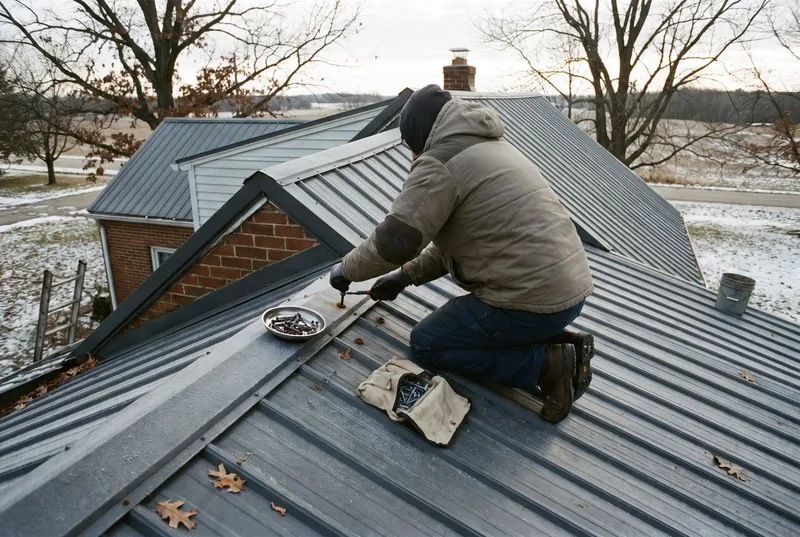
Most metal roof leaks start at a backed-out screw, a cracked washer, a split pipe boot or an open ridge seam. Fix is usually an oversize screw, fresh butyl at the laps and a new boot. If the panels themselves are rusting through, we say so instead of selling a patch.
Choosing a color for a Wisconsin house
Charcoal and black shed snow a little sooner on a sunny morning; light gray and tan keep the attic cooler in August. Kynar 500 holds its color longest; SMP costs less and fades sooner. Our advice: look at the chips against your siding at noon and again at four o'clock before you decide.